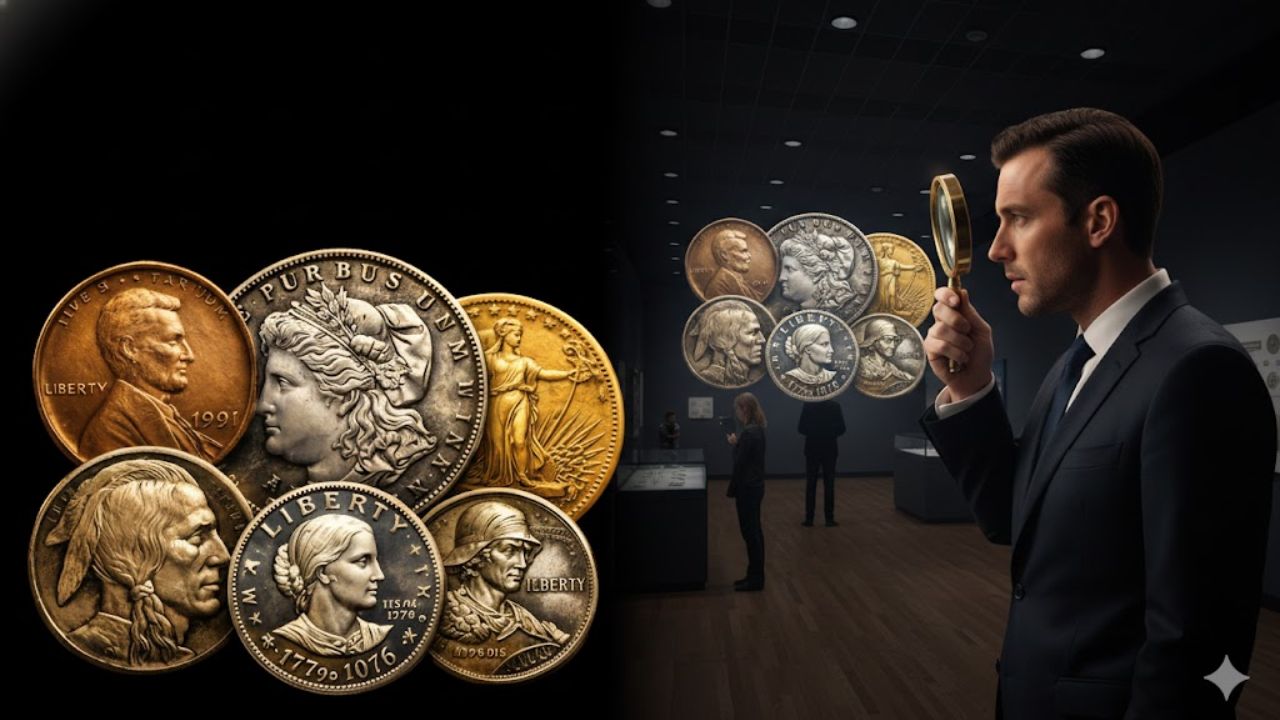
10 Most Valuable Rare: Coins represent far more than simple commerce; they serve as metallic archives of human history and artistic evolution. For the dedicated collector, a rare coin is a bridge to the past that simultaneously functions as a high-stakes financial asset. Throughout the history of the United States and the world, specific minting errors and limited production runs have created “holy grails” that can turn a casual discovery into a life-changing windfall. As we move through 2026, the demand for these historical artifacts has reached unprecedented levels, with elite specimens fetching prices that rival fine art.
The following table highlights key details of the world’s most valuable coins, including their origin and the specific reasons for their legendary status.
| Coin Name | Year of Issue | Estimated Value | Key Reason for Rarity |
| 1794 Flowing Hair Dollar | 1794 | $10 Million+ | First silver dollar struck by the U.S. Mint |
| 1933 Double Eagle | 1933 | $7 Million – $18 Million | Most were melted; only a few legal specimens exist |
| 1804 Draped Bust Dollar | 1804 (struck later) | $4 Million – $10 Million | Rare diplomat presentation pieces; “King of Coins” |
| 1343 Edward III Florin | 1343 | $6.8 Million | One of only three known medieval gold specimens |
| 1913 Liberty Head Nickel | 1913 | $3 Million – $5 Million | Unauthorized production; only five pieces known |
| Brasher Doubloon | 1787 | $5 Million – $9 Million | First gold coin made for the United States |
| 1894-S Barber Dime | 1894 | $1.5 Million – $2 Million | Tiny mintage of only 24 coins total |
| 1943 Copper Penny | 1943 | $200,000 – $1.7 Million | Accidental use of copper during steel-only war year |
Legends of American Gold and Silver
The 1933 Double Eagle remains perhaps the most dramatic story in coin collecting. Though nearly half a million were minted, the shift away from the gold standard led to an executive order to destroy the entire mintage. The few that survived were at the center of decades-long legal battles with the Secret Service. Similarly, the 1804 Draped Bust Dollar holds a special place in history because it wasn’t actually minted in 1804. These coins were produced in the 1830s to be used in diplomatic gift sets for foreign royalty, making them intentional rarities from the moment they were created.

Error Coins and Wartime Anomalies
The 1943 Copper Penny is a prime example of how a simple industrial mistake can create a fortune. During World War II, the U.S. Mint switched to zinc-coated steel to save copper for ammunition. However, a few copper blanks left in the hoppers from 1942 were struck with the 1943 date. These coins are highly sought after because they represent a tangible connection to the American war effort. In the modern era, “double denomination” errors—where a coin is struck twice by two different denomination dies—continue to appear in very small numbers, keeping the thrill of the hunt alive for modern pocket-change hunters.
The Significance of the 1794 Flowing Hair Dollar
As the first official silver dollar issued by the federal government, the 1794 Flowing Hair Dollar is the foundation of American currency. Its design, featuring a youthful Lady Liberty with flowing hair, was a bold statement of a new nation’s identity. Because the equipment at the time struggled to strike such large silver coins, many 1794 dollars are weakly struck or damaged. A high-grade, well-preserved version is so rare that it has held the record for the highest price ever paid for a single coin at auction for multiple years.
How Professional Grading Protects Investors
In 2026, the numismatic market relies heavily on third-party authentication. Services such as PCGS and NGC provide a scientific approach to grading, evaluating a coin’s surface, strike, and luster on a 70-point scale. For million-dollar coins, the difference between a grade of 64 and 65 can mean a price swing of hundreds of thousands of dollars. These services also protect collectors from increasingly sophisticated counterfeits, ensuring that the historical integrity of the piece remains intact for future generations of investors.

Global Rarities and Ancient Treasures
While U.S. coins dominate the headlines, international rarities like the 1343 Edward III Gold Florin remind us of the deep history of European coinage. Only three of these coins are known to have survived the centuries. Such coins are prized not only for their gold content but for their survival through wars, plagues, and the rise and fall of empires. Collecting on this level requires a deep understanding of archaeology and medieval history, as these coins are often discovered in hidden hoards or riverbeds after hundreds of years of being lost.
Final Verdict
The world of rare coins is a unique intersection of history, art, and high finance. While the odds of finding a million-dollar coin in daily circulation are astronomical, the continued discovery of rare errors and high-grade specimens proves that treasures are still out there. Success in this field requires patience, a keen eye for detail, and a commitment to learning the subtle nuances that separate a common coin from a historical masterpiece.
Disclaimer
The financial figures and auction records mentioned in this article are based on market data available through early 2026 and are subject to change based on market demand and economic conditions. Investing in rare coins involves risk, and values can fluctuate. It is highly recommended to seek professional appraisal and authentication before purchasing or selling any high-value numismatic items to ensure accuracy and fairness in pricing.

Would you like me to generate a high-resolution comparison chart showing the visual differences between a genuine 1943 copper penny and a common copper-plated steel counterfeit?
