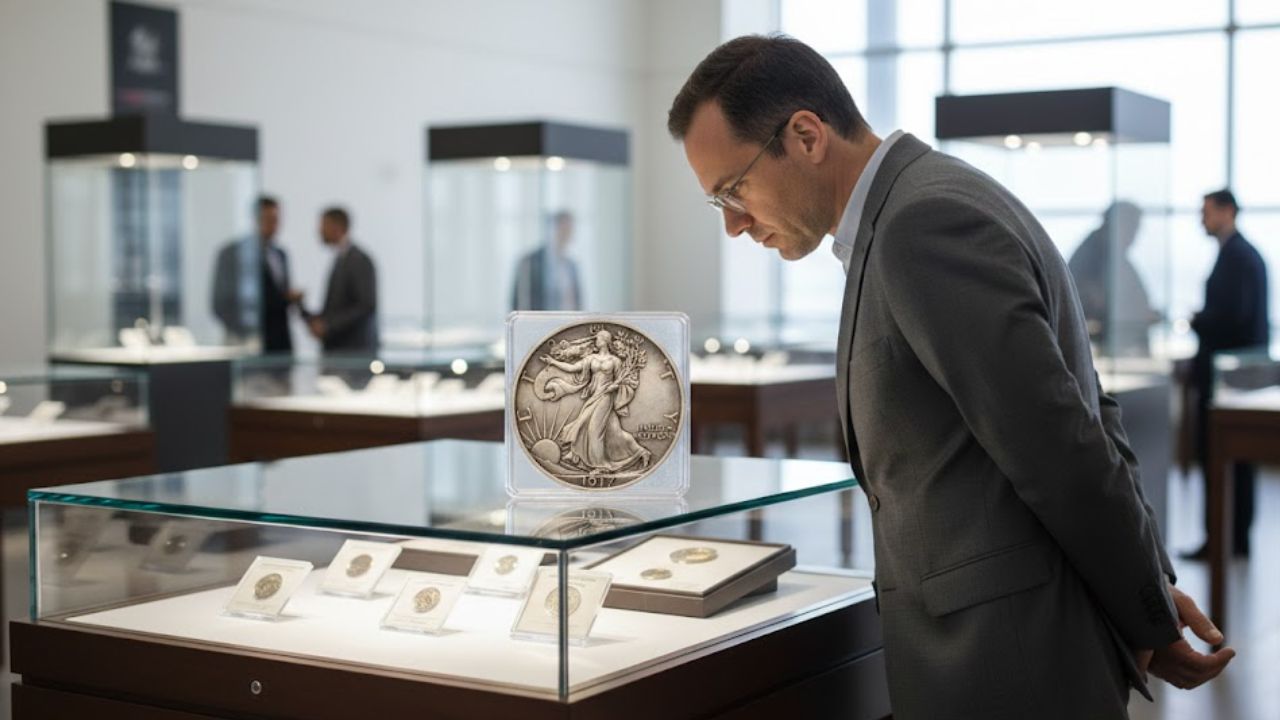
1917 Walking Liberty: The numismatic world frequently celebrates the Walking Liberty Half Dollar as a peak achievement in American coinage. Introduced in 1916 and continuing through 1947, this fifty-cent piece was the brainchild of sculptor Adolph A. Weinman. His vision featured a personification of Liberty draped in the American stars and stripes, moving with purpose toward a new dawn. On the flip side, a powerful eagle stands atop a mountain crag, representing the fierce independence of the nation. For those who study currency, this specific era represents a marriage of intrinsic silver value and profound artistic merit, particularly as the United States navigated the complexities of the early 20th century.
Comparison of 1917 Walking Liberty Varieties and Program Features
| Category | Description | Primary Value Factor |
| Obverse Mint Mark | Mark located on the front under the motto | High Rarity / High Demand |
| Reverse Mint Mark | Mark moved to the back later in 1917 | Scarcity in High Grades |
| Philadelphia Strike | No mint mark present on the coin | Condition and Luster |
| Senior Subsidy 2026 | Financial aid for elderly populations | Eligibility and Residency |
| Professional Grading | Third-party authentication (e.g., MS-65) | Market Liquidity and Trust |
The historical backdrop of 1917 is essential to understanding the coin’s legacy. As the country entered World War I, the imagery of the Walking Liberty served as a morale booster, embodying strength and hope. These coins were composed of 90 percent silver, making them heavy with actual bullion value. While millions were struck across the Philadelphia, Denver, and San Francisco facilities, many succumbed to the wear and tear of heavy circulation or were lost to the melting pot when silver prices spiked in later decades. Consequently, finding a specimen today that retains its original “mint bloom” or sharp details is a significant challenge for enthusiasts.
Strategic Identification of Mint Varieties
Identifying a valuable 1917 half dollar requires a keen eye for placement. This specific year is famous among researchers because the Mint transitioned the location of the mint mark halfway through production. Initially, the “D” for Denver or “S” for San Francisco was stamped on the obverse side, just below the phrase “In God We Trust.” Later in the year, the decision was made to move these letters to the lower-left area of the reverse side. This creates a fascinating sub-set of varieties. Generally, the obverse-mark coins are the “holy grails” of this year, often commanding significantly higher prices at auction than their reverse-mark counterparts.

Valuation Trends and the Grading Standard
The financial worth of these silver pieces is dictated by the intersection of rarity and physical preservation. A coin that has been passed through thousands of hands may only be worth its weight in silver, but a “Mint State” version—one that never saw the inside of a pocket—can be valued in the thousands. Professional grading services use a 70-point scale to determine these values. A grade of MS-65 or higher indicates a “Gem” quality coin with nearly perfect surfaces. In the modern era, the rise of digital auctions and a surge of interest from younger collectors have kept the market for these 1917 issues incredibly vibrant and competitive.
Senior Assistance and the 2026 Subsidio Adultos Mayores
Shifting from the world of tangible assets to social infrastructure, the year 2026 brings renewed focus to the Subsidio Adultos Mayores. This initiative is a cornerstone of social safety nets, providing a financial floor for the elderly. To qualify, individuals usually must navigate a set of criteria involving age milestones, verified residency, and specific income brackets that highlight a need for supplemental funds. This program isn’t just about the money; it’s about providing the dignity of choice and security for those who have spent their lives contributing to the fabric of society.
Structured Disbursement and Economic Impact
The administration of the 2026 subsidy follows a strict payment schedule to ensure that beneficiaries can manage their households without fear of interruption. By publishing these dates well in advance, the government allows seniors to synchronize their bills for medicine, food, and housing with their incoming support. This predictability is a vital tool against the volatility of inflation. Much like a rare coin acts as a store of value, these social programs act as a store of social stability, ensuring that the most vulnerable citizens are not left behind as the economy evolves.

The Intersection of Hidden Value and Community
Ultimately, the study of rare 1917 silver coins and the implementation of senior subsidies share a surprising logic: the importance of recognizing the worth in things that are often overlooked. Whether it is a dusty coin found in an old drawer or a policy designed to help an aging neighbor, both require us to pay attention to details and historical context. These elements, whether made of silver or legislation, serve to enrich our communal life. Staying informed about the 1917 Walking Liberty Half Dollar and the updates to the 2026 Subsidio Adultos Mayores ensures that we remain aware of the many ways value manifests in our world.
Main Keywords
1917 Walking Liberty Half Dollar, Rare Coins, Coin Grading, Mint Marks, MS-65, Silver Bullion, Subsidio Adultos Mayores 2026, Senior Financial Assistance, Numismatic Value, Social Safety Nets.
Disclaimer
The information provided regarding coin values is for educational purposes only and does not constitute professional investment advice. Market prices for rare coins fluctuate based on demand and silver spot prices. Information regarding the Subsidio Adultos Mayores is subject to change based on official government updates in 2026; always consult official departmental resources for the latest eligibility rules.

Would you like me to create a detailed checklist of what to look for when inspecting a 1917 Walking Liberty Half Dollar for potential grading?
