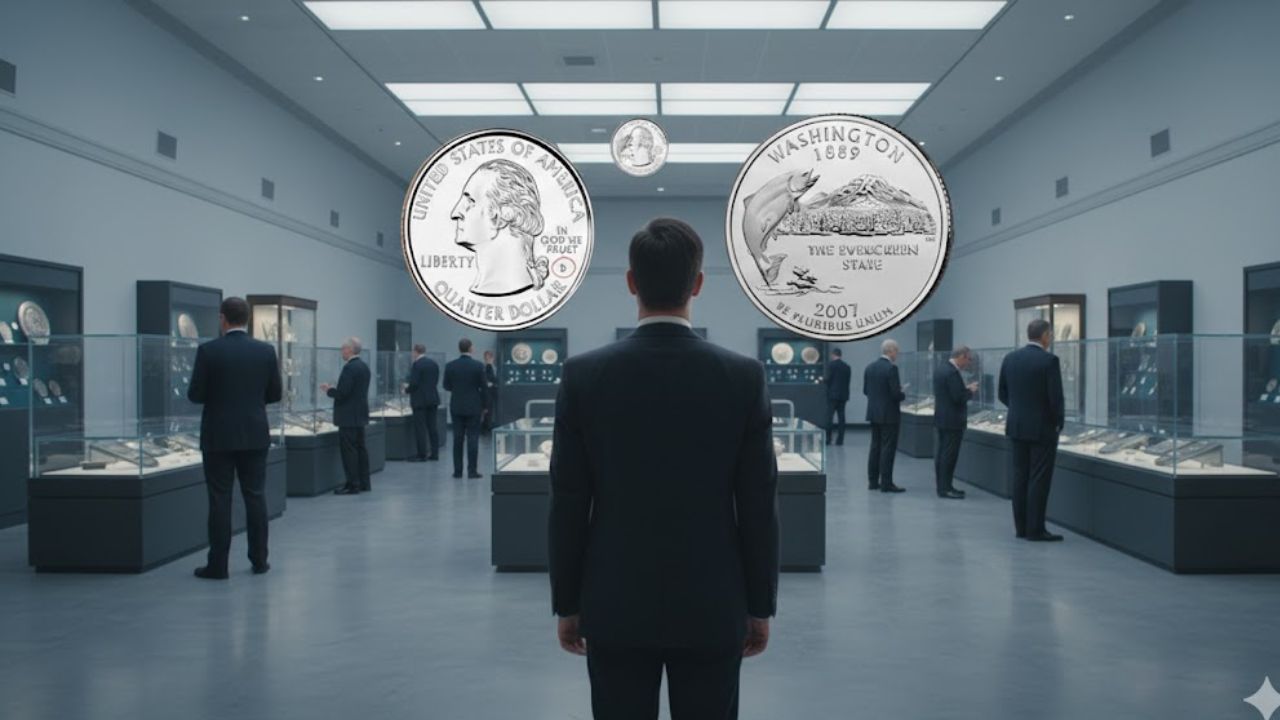
2026 Rare 2008 State: Coin collecting remains a captivating hobby that connects history with the thrill of discovery. In 2026, the market for the final five issues of the 50 State Quarters Program Oklahoma, New Mexico, Arizona, Alaska, and Hawaii has reached a mature, quality-driven phase. While most of these coins remain at face value, rare minting errors from the 2008 series have become highly sought-after treasures, with some fetching thousands of dollars in high-grade auctions.
2008 State Quarter Error Value Guide (2026 Market)
The following table highlights the most significant errors found in the final year of the State Quarters Program and their current market expectations.
| State | Specific Error Type | Identifying Feature | 2026 Estimated Value |
| Arizona | Extra Cactus Leaf | Die chip over initials (JFM) | $5 – $50 |
| Alaska | “6-Clawed Bear” | Die chip near the bear’s paw | $10 – $250 |
| Hawaii | Doubled Die Reverse | Doubling in “UA MAU KE EA…” | $50 – $1,500+ |
| All States | Off-Center Strike | Design shifted (50%+ missing) | $500 – $2,000 |
| All States | Wrong Planchet | Struck on a nickel or dime blank | $2,000 – $5,000+ |
| All States | Clipped Planchet | Curved or straight missing edge | $150 – $800 |
Types of Errors Found in 2008 State Quarters
Error coins are prized for their rarity and visual distinction. In 2026, collectors are particularly focused on the following varieties from the 2008 series:

- Double Die Errors: These occur when a die receives a misaligned impression during its creation. In Hawaii quarters, look for distinct doubling on the inscription or King Kamehameha’s features.
- Off-Center Strikes: If the coin blank is misaligned, the design is shifted. The more of the design that is missing, the higher the value, especially for coins retaining the date and mint mark.
- Die Chips and Breaks: Common in Arizona (Extra Cactus Leaf) and Alaska (6-Clawed Bear), these occur when a small piece of the die breaks off, leaving a raised “blob” of metal on the coin.
- Wrong Planchet Errors: Among the rarest finds, these occur when a quarter is struck on metal intended for another denomination. These coins will be the wrong color, size, or weight.
How to Identify and Preserve Error Quarters
Distinguishing between a genuine mint error and post-mint damage (PMD) is essential. A magnifying loupe or digital microscope is highly recommended for identifying fine doubling or die chips. Genuine errors show smooth metal flow and a crisp strike, whereas post-mint damage usually shows jagged edges or compressed metal.
Preservation is key to maintaining value. Error coins should be kept in PVC-free protective holders to prevent tarnish. Avoid cleaning your coins, as this can destroy the original mint luster and significantly reduce the numismatic value.
Market Trends in 2026
The market for modern error coins is currently robust. As the 50 State Quarters Program recedes further into history, high-grade certified errors (MS66 and above) have seen steady price appreciation. Digital marketplaces and professional grading services like PCGS and NGC have made the market more transparent, allowing collectors to verify the rarity of their finds with confidence. Because the supply of 2008 errors is fixed, demand for these “final year” anomalies remains high.

Final Verdict
The 2008 State Quarter errors serve as a fascinating conclusion to one of the most successful programs in U.S. Mint history. While pocket change often holds only 25 cents, a keen eye for “Extra Cactus Leaves” or “6-Clawed Bears” can turn a simple transaction into a significant find. For the serious collector in 2026, the combination of historical significance and unique minting flaws makes these coins a worthy addition to any portfolio.
Disclaimer
The values provided are based on average auction results and market trends as of early 2026. Coin values fluctuate based on demand, condition, and certification. Most quarters found in circulation are worth face value. It is recommended to have any significant find authenticated by a professional grading service before sale.
Would you like me to create a “Step-by-Step Search Checklist” for identifying the 2008 Arizona “Extra Cactus Leaf” and the Alaska “6-Clawed Bear” errors?