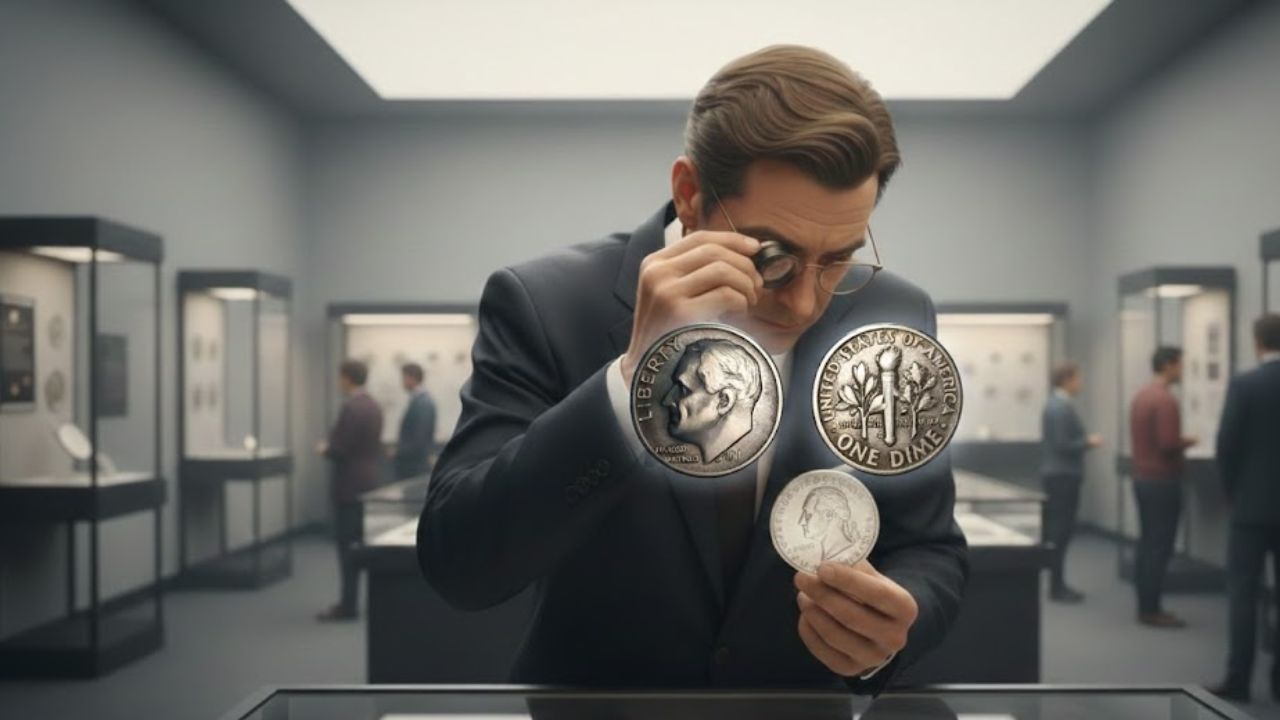
2026 Roosevelt Dime Value: The Roosevelt dime has been a cornerstone of American coinage since 1946, created to honor President Franklin D. Roosevelt after his passing. Designed by John R. Sinnock, the dime features Roosevelt’s portrait on the obverse and a torch flanked by an olive branch and oak branch on the reverse, symbolizing liberty, peace, and strength. While most Roosevelt dimes are worth only their face value, certain rare varieties and minting errors have become legendary treasures. In 2026, collectors continue to discuss extraordinary Roosevelt dimes with valuations that can reach staggering heights, representing the pinnacle of rarity and desirability.
The Origins of the Roosevelt Dime
The Roosevelt dime replaced the Mercury dime in 1946. Its introduction was not only a tribute to Roosevelt’s leadership during the Great Depression and World War II but also a recognition of his role in founding the March of Dimes, a campaign to fight polio. The coin was originally struck in 90 percent silver until 1964, after which the composition changed to copper-nickel clad due to rising silver prices.
Why Some Roosevelt Dimes Are Valuable
Most Roosevelt dimes are common, but certain factors can dramatically increase their value:
- Low mintage numbers creating scarcity
- Minting errors such as double dies or off-center strikes
- Special proof issues with limited production
- Condition, with uncirculated and proof-like coins commanding higher premiums
- Collector demand for rare varieties tied to historical significance
The Legendary Valuation Claims
Among the headlines in the collector community, stories of a Roosevelt dime valued at $15.8 million have sparked significant curiosity. This figure is generally considered a theoretical “ceiling” for an ultimate rarity—such as a unique transitional error or a one-of-a-kind experimental strike. While no public auction has confirmed a sale at this specific price point, the legend persists because uniqueness in numismatics can drive demand far beyond traditional price guides. For many, it serves as a symbol of the “impossible find” that keeps the spirit of the hunt alive.

Rare and Valuable Roosevelt Dimes
Several Roosevelt dimes stand out as highly valuable due to rarity, condition, or minting errors. Notable examples include:
- 1949-S: A low mintage coin that is scarce in high grades.
- 1950-S: Another low mintage issue, highly prized by collectors.
- 1968 No S Proof: A rare error where the San Francisco mint mark was omitted.
- 1970 No S Proof: Another missing mint mark error, extremely valuable.
- 1982 No P Dime: A Philadelphia issue struck without the mint mark, making it a modern rarity.
- 1975 No S Proof: One of the rarest modern coins, with only two known examples.
Error Coins and Their Value
Error coins are always fascinating to collectors because they represent rare mistakes in the minting process. Some Roosevelt dime errors include:
- Double die obverse or reverse, showing doubling in the lettering or design.
- Off-center strikes, where the design is shifted.
- Wrong planchet errors, where the dime design was struck on a blank intended for another denomination.
- Missing mint marks, especially in proof issues.
These errors can elevate the value of a Roosevelt dime from a few dollars to hundreds or even thousands, depending on rarity and condition.
Value Chart for 2026
While values fluctuate based on market demand, condition, and rarity, the following chart provides a general overview of Roosevelt dime prices in 2026:

| Year/Variety | Composition | Average Value (Circulated) | Value in Mint State | Notes |
| 1949-S | 90% Silver | $5–$15 | $200+ | Low mintage |
| 1950-S | 90% Silver | $5–$20 | $250+ | Scarce issue |
| 1968 No S Proof | Proof | N/A | $10,000+ | Rare error |
| 1970 No S Proof | Proof | N/A | $15,000+ | Extremely rare |
| 1982 No P | Copper-Nickel | $50–$100 | $500+ | Modern rarity |
| 1975 No S Proof | Proof | N/A | $500,000+ | Only two known |
Collector Trends in 2026
The market for Roosevelt dimes has seen renewed interest in recent years. In 2026, several trends stand out:
- Increased demand for silver issues, especially those struck before 1965.
- Growing interest in error coins, such as the 1968 No S and 1982 No P varieties.
- Rising values for high-grade proof and mint state coins certified by professional grading services.
- Collectors focusing on complete sets, including both circulation strikes and proof issues.
Collector Grading Guide
Grading plays a vital role in determining the value of Roosevelt dimes. Coins are graded on a scale from Poor (P-1) to Mint State (MS-70). Key grading factors include:
- Strike quality: Sharp details and clear design elements increase value.
- Luster: Original mint shine is highly desirable.
- Surface preservation: Fewer scratches, marks, or wear result in higher grades.
- Eye appeal: Overall attractiveness of the coin influences collector demand.
Tips for Collectors
- Inspect coins carefully under good lighting and magnification.
- Store coins in protective holders to preserve condition.
- Consider professional grading for rare varieties.
- Stay informed about auction results and collector trends.
- Explore inherited collections, as rare Roosevelt dimes are sometimes overlooked.
Final Verdict
The Roosevelt dime remains one of the most enduring coins in American numismatics. While most examples are worth only face value, rare varieties and error coins can command significant premiums. The legends of multi-million dollar dimes highlight the extraordinary potential hidden in everyday collections. For collectors, the pursuit of Roosevelt dimes is not just about wealth but about preserving history and enjoying the thrill of discovery.
Disclaimer
This article is provided for educational and informational purposes only. The $15.8 million valuation is based on speculative reports and theoretical rarity rather than a documented public sale. Coin values fluctuate constantly based on market conditions, rarity, and professional grading. Always consult a certified numismatist before making buying or selling decisions.

Would you like me to research the current auction history for the “Full Band” silver Roosevelt dimes to see which years are currently peaking in value?
