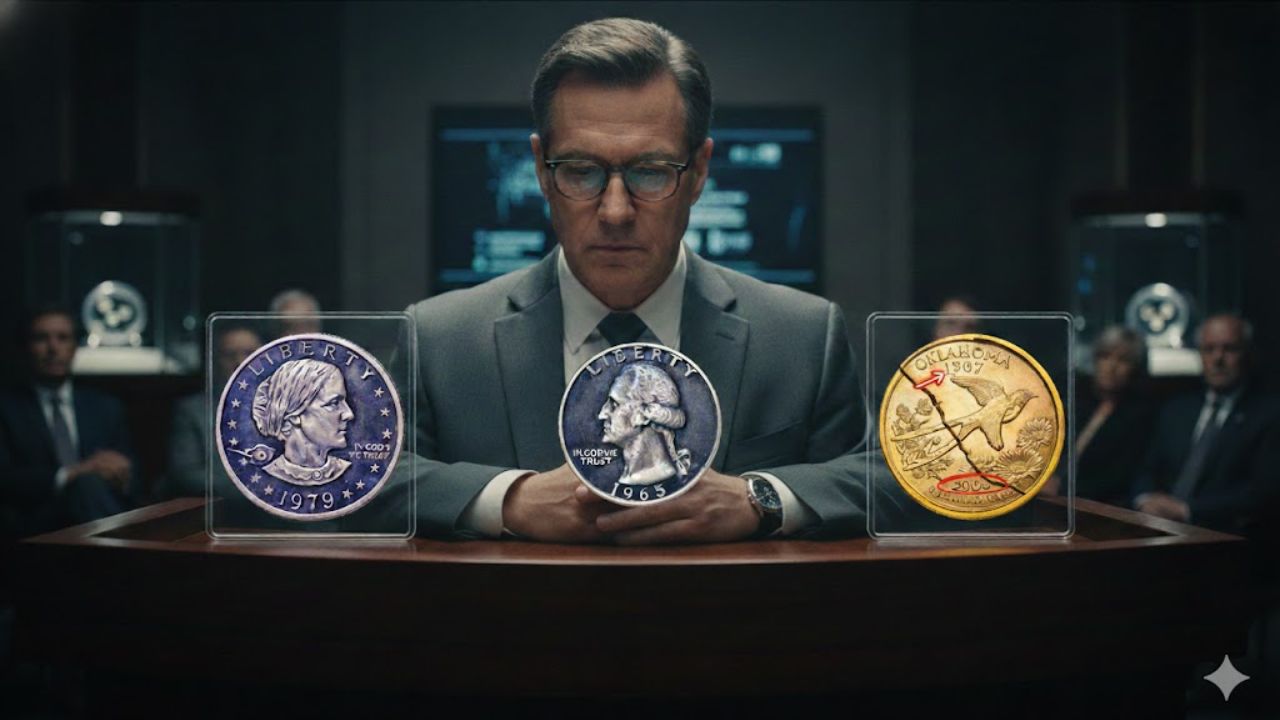
Most Valuable State: When the United States Mint launched the 50 State Quarters Program in 1999, it quickly became one of the most popular coin series in American history. Millions of people collected these coins as they were released, filling maps and albums with designs representing each state. While most of these quarters are worth only twenty-five cents, some rare varieties and error coins have become highly valuable, fetching hundreds or even thousands of dollars. In this article, we explore the most valuable state quarters, why they are worth so much, and how you can identify them before accidentally spending one in 2026.
The following table summarizes the key varieties and their estimated market values in the current 2026 collector market:
| State Quarter Variety | Key Identification Feature | Estimated Value (2026) |
| 1999-P Pennsylvania | MS67+ Ultra High Grade | $2,500 – $10,000+ |
| 2004-D Wisconsin | Extra High or Low Corn Leaf | $300 – $6,000+ |
| 1999 Georgia (P) | Struck on Gold Sacagawea Planchet | $5,000 – $10,000+ |
| 2005-P Minnesota | Extra Tree (Doubled Die) | $150 – $1,000 |
| 2005-D Kansas | “In God We Rust” (Missing T) | $100 – $2,000 |
| 2009-D D.C. | Doubled Die “ELL” in Ellington | $50 – $450 |
| 1999-P Delaware | “Spitting Horse” Die Crack | $20 – $500 |
The 1999 Delaware Spitting Horse Quarter
The Delaware quarter was the first coin released in the program, featuring Caesar Rodney on horseback. A rare error known as the “Spitting Horse” makes this coin highly collectible. The error appears as a die crack extending from the horse’s mouth, giving the impression that the horse is spitting. Depending on condition, these coins can be worth hundreds of dollars. Collectors prize them for their distinctive appearance and quirky nickname, though in 2026, only the boldest cracks in high-grade condition command the top prices.
The 2004 Wisconsin Extra Leaf Quarter
The Wisconsin quarter depicts a cow, a wheel of cheese, and an ear of corn. Some coins from the Denver Mint were struck with an extra leaf on the corn, creating two varieties known as the “Extra High Leaf” and “Extra Low Leaf.” These error coins are extremely rare and have sold for hundreds or even thousands of dollars. Their unusual design variation, believed to be caused by a tool mark on the die, makes them one of the most famous and valuable state quarters.
The 2005 Kansas In God We Rust Quarter
The Kansas quarter features a buffalo and the state motto “In God We Trust.” A rare error caused some coins to be struck with a weak or missing “T,” resulting in the phrase “In God We Rust.” This error variety is highly collectible, with values ranging from tens to hundreds of dollars depending on condition. The error occurs due to grease buildup in the die, and collectors in 2026 particularly seek out “D” mint marks with a completely invisible “T” for maximum value.

The 2001 North Carolina Double Die Quarter
The North Carolina quarter commemorates the Wright brothers’ first flight. Some coins were struck with a doubled die error, resulting in noticeable doubling on the inscriptions. This error variety is rare and valuable, with prices reaching into the hundreds for well-preserved examples. Collectors prize it for its historical significance and unique appearance. Because this doubling can be subtle, using a 10x magnification loupe is essential for proper identification.
The 2000 South Carolina Off-Center Strike Quarter
The South Carolina quarter features the state outline, palmetto tree, and other symbols. A small number of these coins were struck off-center, creating a distinctive error variety where part of the planchet is left blank. Off-center strikes are rare and highly collectible, with values depending on the degree of the error (typically measured in percentages) and the coin’s condition. Some 50% off-center examples from early years like 2000 have sold for hundreds of dollars at major auctions.
Why These Quarters Are Valuable
The value of rare state quarters comes from a combination of rarity, condition, and uniqueness. Error coins are particularly valuable because they represent mistakes in the minting process, making them stand out from millions of standard issues. Condition plays a crucial role, with coins in “Mint State” (MS) commanding far higher prices than those with wear. In 2026, the demand for “Gem” quality (MS65 and above) has created a significant price gap between average and superior specimens.
How to Spot Valuable State Quarters
Identifying valuable state quarters requires careful attention to detail. Collectors often look for mint marks (P, D, S, or W), which indicate where the coin was produced. Errors such as doubled dies, off-center strikes, or unusual features like “die cuds” (extra metal lumps) can significantly increase a coin’s value. Using a magnifying glass and consulting reputable coin guides can help determine whether a quarter is rare or valuable. Professional grading services also provide certification, ensuring authenticity and accurate valuation for high-ticket items.
Collecting State Quarters
The State Quarters Program introduced millions of people to coin collecting. Families across the country collected the coins as they were released, filling maps and albums with each state design. For serious collectors, the hunt for rare varieties and errors adds excitement to the hobby. State quarters offer a wide range of designs and possibilities, making them an accessible and rewarding pursuit. As interest in the “American Women” and “Semiquincentennial” quarters grows in 2026, the original state series remains a foundational part of modern numismatics.

Investment Potential
Rare state quarters are not only collectibles but also investment opportunities. Their rarity and demand make them tangible assets that can appreciate over time. Investors view these coins as a way to diversify portfolios while enjoying the artistry and history they represent. However, like any investment, coin collecting requires knowledge and careful research to avoid pitfalls. Consulting professional grading services like PCGS or NGC and reputable dealers is essential for ensuring authenticity and value in 2026.
Key Highlights
The State Quarter series remains a high-interest area for modern coin hunters.
Rare error coins like the Wisconsin Extra Leaf can be worth up to $6,000.
High-grade early issues from 1999 (Pennsylvania and Delaware) are reaching record values.
“Experimental planchet” errors, such as Georgia quarters struck on gold-toned blanks, are extremely rare treasures.

Condition and professional grading (MS65+) are the primary drivers of five-figure valuations.
Doubled die errors on later issues (2009 D.C. and Puerto Rico) are becoming more recognized by specialists.
Final Verdict
State Quarter Dollar coins may seem ordinary at first glance, but hidden among them are treasures worth a fortune. From the quirky Delaware Spitting Horse to the famous Wisconsin Extra Leaf, these coins capture the imagination of collectors and investors alike. Their value lies not only in rarity but also in the stories they tell about history and minting practices. For enthusiasts in 2026, the pursuit of these coins is both a passion and a potential investment. Whether discovered in circulation or acquired through auctions, the most valuable state quarters continue to inspire and excite collectors around the world.
Disclaimer
This article is for informational purposes only. Market values are based on current 2026 auction data and expert price guides. Coin values fluctuate based on demand, condition, and professional grading. Readers should consult with a certified numismatist or professional grading service before making high-value purchases or sales.
