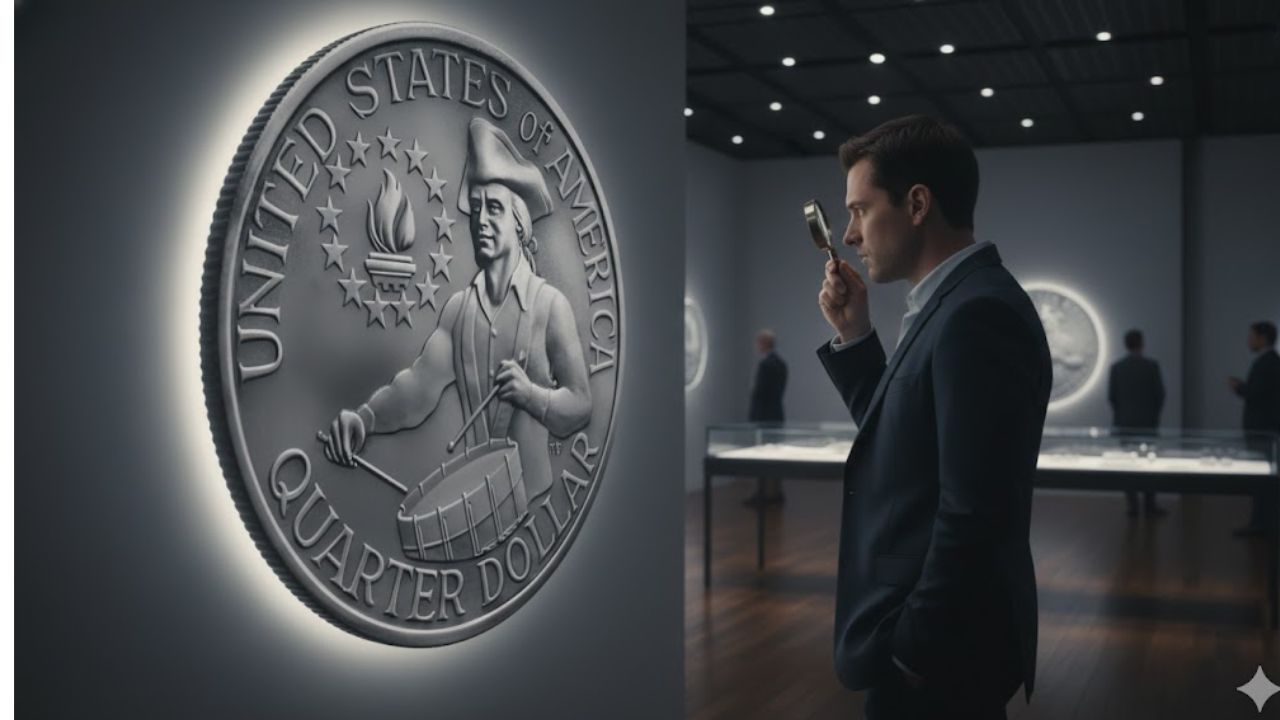
Rare 1976 Drummer: The 1976 Drummer Boy quarter remains one of the most recognizable pieces of American currency ever produced. Minted to celebrate the 200th anniversary of the United States, this coin replaced the traditional eagle on the reverse side with a colonial drummer and a victory torch encircled by thirteen stars. This specific artwork, designed by Jack L. Ahr, was chosen through a national competition to symbolize the spirit of the American Revolution. While billions were produced for general circulation, the numismatic world has identified specific specimens that carry values far beyond twenty-five cents.
The table below outlines the primary factors that differentiate a common pocket change quarter from a high-value collector’s item.
| Feature | Description | Potential Value Range |
| Standard Clad | Common copper-nickel composition found in daily change | Face Value to $5 |
| 40% Silver Uncirculated | Struck at the San Francisco Mint for collector sets | $10 – $100 |
| Silver Proof (Deep Cameo) | Mirror-like finish with frosted details | $50 – $1,000+ |
| Major Minting Errors | Off-center strikes, double dies, or wrong planchets | $500 – $10,000+ |
| Rare MS70 Grade | A perfect specimen with no visible flaws under magnification | Up to $550,000 |
Factors That Elevate the Value of Bicentennial Quarters
The primary reason a Drummer Boy quarter might reach a valuation of $550,000 is a combination of perfect preservation and extreme rarity. Most coins from 1976 were heavily circulated, leading to scratches, dents, and wear that lower their numismatic appeal. A coin that has been tucked away for decades and earns a Mint State 70 grade from a professional service is essentially a one-of-a-kind artifact. Furthermore, the metal composition plays a significant role; while most quarters are clad in copper and nickel, the San Francisco Mint produced silver versions specifically for collectors. A silver error coin in perfect condition is the “holy grail” for many enthusiasts.

Identifying Minting Errors and Special Strikes
To find a valuable quarter, you must look for anomalies that occurred during the manufacturing process. Common errors include the “Double Die Obverse,” where the lettering or the date appears to have a faint ghost image or shadow behind it. Another significant error is the “Struck on Wrong Planchet” mistake, where a quarter design is accidentally pressed onto a dime or penny blank. These mistakes are rare because the U.S. Mint has rigorous quality control measures, meaning very few of these defective coins ever leave the facility.
The Importance of Professional Authentication and Grading
If you discover a coin that appears to be silver or shows a clear structural error, the next step is professional grading. Organizations such as the Professional Coin Grading Service (PCGS) or the Numismatic Guaranty Company (NGC) use expert analysis to verify that a coin is genuine and not a clever counterfeit. They assign a grade on a 70-point scale. Because the difference between a grade of 69 and 70 can result in a price difference of thousands of dollars, having a certified “slabbed” coin is the only way to secure a high-end sale at an auction.
Market Trends for Rare Bicentennial Coinage
The market for rare quarters is driven by historical significance and the desire for completion among collectors. As the United States moves further away from its bicentennial year, the scarcity of high-quality 1776-1976 coins increases. Recent auctions have shown a surge in interest for coins that represent “firsts” or “lasts” in design history. While the $550,000 figure represents the absolute peak of the market, it serves as a reminder that everyday objects can hold hidden fortunes if they possess the right set of unique characteristics.
Final Verdict
The 1976 Drummer Boy quarter is a masterpiece of American mintage that continues to surprise the public. While it is statistically unlikely that the average quarter in a vending machine is worth a fortune, the existence of ultra-rare silver proofs and error coins keeps the hunt alive for millions of people. Checking your change is a low-effort hobby that occasionally yields significant financial rewards, provided you know exactly what details to look for.
Disclaimer
The valuations mentioned in this article are based on historical auction records and professional grading reports. Most 1976 quarters are only worth their face value of twenty-five cents. Before investing in rare coins or paying for expensive grading services, consult with a reputable local coin dealer or a certified numismatic professional to avoid potential scams or overvalued claims.
Would you like me to generate an image showing the specific differences between a standard clad edge and a silver edge for your identification efforts?